Sea Horses and Mermaids
For a while now, we’ve been hearing rumours about snorkelling with seahorses. "Right!" I thought. "And I’m talking to faeries!" They’re almost extinct and live somewhere in the tropics. Exactly, in Inhambane, in tropical waters!

One day we investigated; of course, it’s easier said than done, as everyone has a different story: some say it’s just after Bar Babalaza, while others say it’s near Barra. I think it’s almost halfway between the two, on the left-hand side of the road leading down to the Estuary. I think it would be better to use the GPS coordinates -23.8043 Lat & 35.4894, Lon.

The short journey through the palm groves offers us a glimpse into the lives of ordinary subsistence farmers, including how and where they live and the conditions they endure. My only regret is that the children's call of "sweetie, sweetie" two years ago was unheard of. I find it sad that tourists patronize these friendly, happy children by giving them sweets. Might a book or a pencil have been a better alternative? Give a man a fish, and he has food for a day; give him a rod and an education, and he has food for life. Many people depend on the sea and the estuary for food and income, leading to the indiscriminate harvesting of anything edible, from the tiniest molluscs to the threatened seahorses. This happens because of a lack of education, poverty, and unemployment.

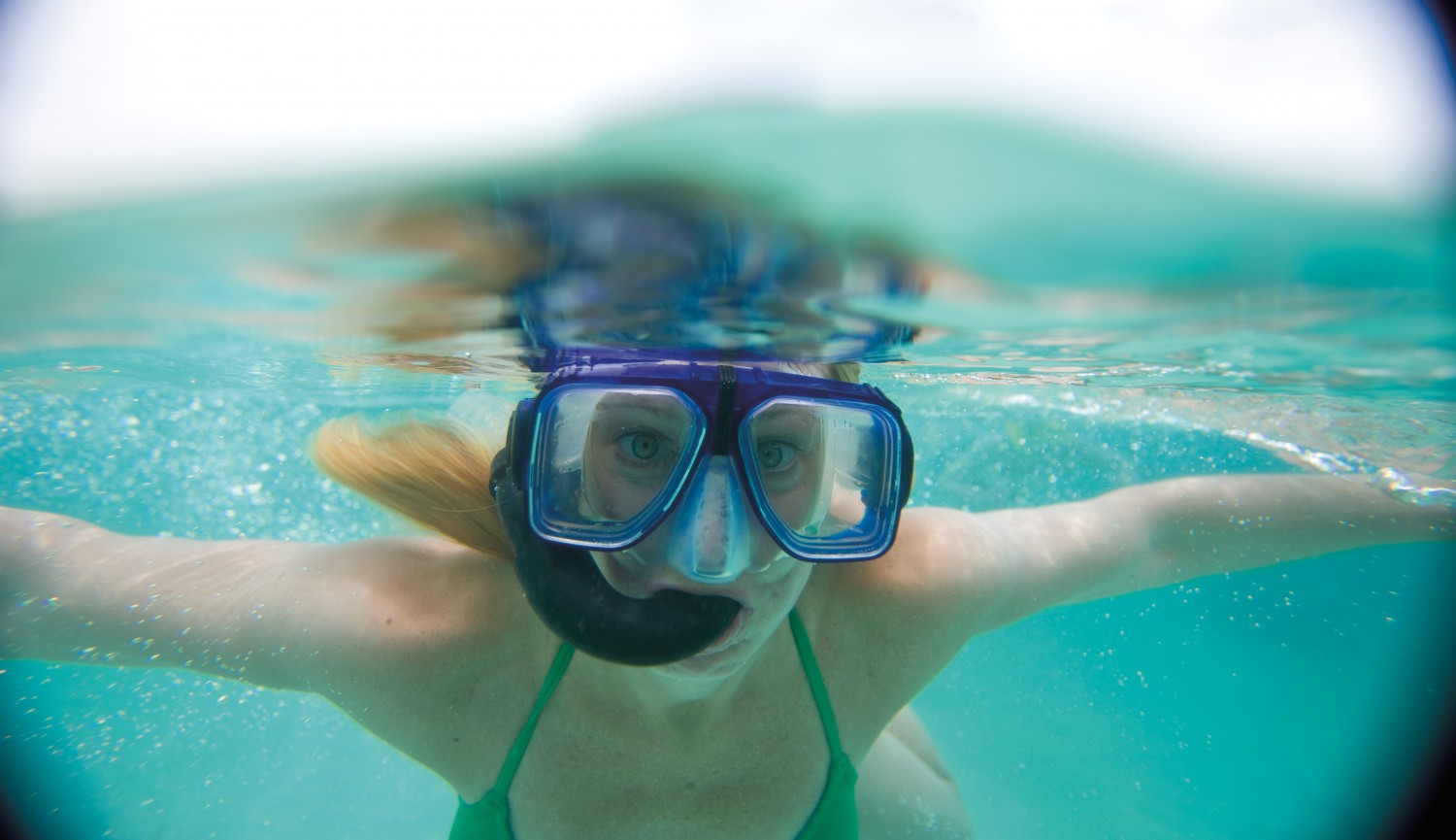
Barra Lake & Sea is the spot to be. Make bookings, as the trip must take place during low tide. We set off on foot through the Estuary to the very quiet waters of the Estuary Reef. Pack waterproof shoes (Crocs or tackies), a bather, sunscreen, a hat, sunglasses, water, a camera, and a GoPro! There, we donned our snorkels (no other gear needed) and floated away in the warm, blue waters.

The reef that grows on a long-abandoned causeway is teeming with all manner of sea life, including corals, stonefish, starfish, seahorses, sea moths, many species of reef fish, hairy frogfish, sea cucumbers, eels, and colourful tropical fish, too many for me to remember. But of course, the pièce de résistance was the tiny seahorses and the very poisonous stonefish, so well camouflaged that no one would notice unless a trained guide pointed it out.

We wallowed for at least an hour and a half until the entire group had seen all the species. Our two guides were very informative and could spot the fish a mile off. I would highly recommend this outing even to someone who can’t swim; by the end of the day, you’re sure to float.

It's only in nature that I truly experience silence, and of course, whilst snorkelling, the only sounds are one's own breathing and the bubbles one exhales. It is while swimming among these amazing creatures that one sees them for what they are: rare, fragile, precious, and amazing, quietly going about their business. Thank goodness some people appreciate their uniqueness and fragility and care enough about nature and the sea to save them.

For lunch, we went to the recommended local restaurant. Directions were scant, but we meandered through the palm trees and villages until we found it! The beer was ice-cold and just what the doctor ordered. The menu is limited to chicken, fish, mussels, clams, or Mattapa and Cassava (local traditional fare). Prices are great. We enjoyed our Blue Crab, Piri-Piri Chicken, and Mattapa. We were shown how to shave a fresh coconut in a very primitive but effective way, and it tasted delicious. We also tasted fresh coconut oil; this impressed our Canadians, as they’re into all that healthy stuff.

Last but not least, you’ll need to take the trip in a 4X4. I can’t imagine getting there by car. Children of all ages who can swim, of course, would love this adventure. It's educational, unique, and gets them off the internet.

Comments


Topics
Latest Photos