Caught On The Spot -Savouring South Luangwa National Park – Butch’s Zambia Part 4
The Honey Badger’s top speed is 90 km/h on a good road with no traffic. On busy African rural roads and highways, we travel at a steady 65 km/h if we’re lucky.

What would normally be a four-hour trip now takes at least eight hours. We measure distances and then double the time; sometimes we’re more or less correct! The GPS ignores us now. We’re pros at guesstimating.


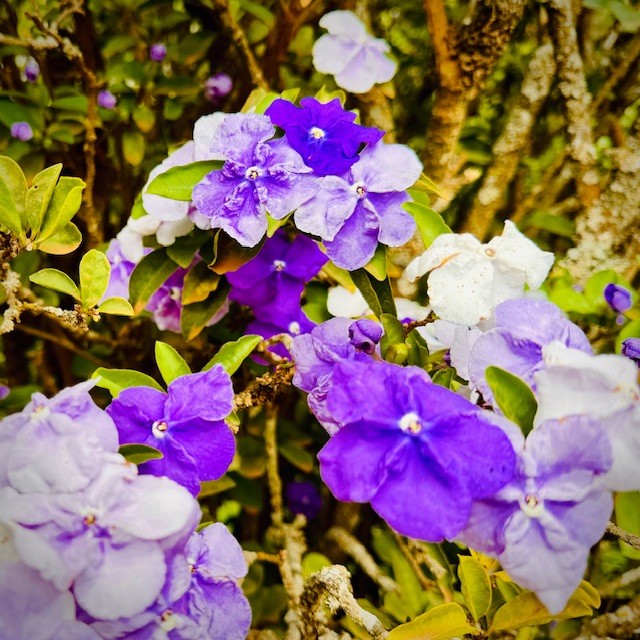
The stark winter landscape was breathtaking in its simplicity. Jewel colours highlighted the earthy hues of winter white, ochre, auburn and russet. Amethyst and violet Jacaranda blossoms were sprinkled liberally. Driving into flushed sunsets of rosy gold and gentle aquamarine skies encouraged us to pick up the pace.


Here and there, we noticed whispers of spring as new growth unfurled in a rainbow of gentle green. Trees, like giant, bright-green broccolis on stalks, were a highlight.


We crossed ancient bridges, tranquil rivers, busy markets, fish sellers, rolling foothills, and unknown mountain ranges. The sky was blue, dotted with puffy cotton-ball clouds; the yellow sun was hot, and we were excited to explore and revisit Butch's childhood.


---oOo---


We would never make it to South Luangwa in one day from Livingstone, so we decided to spend two nights at Lukasa Campsite on the outskirts of Lusaka.

The idea of joining the owner and other guests for a communal supper appealed to us. Soon after sunset, we gathered around a large fire pit.
There were eight of us—campers and friends from a neighbouring farm who came over on Sunday evenings for a potluck at their “table d’hôte.”
The pizzas were terrific. Sourdough with crispy crusts and decadent toppings—fresh basil, rocket, figs, blue cheese, and Parma ham. I salivate at the thought.

The owners, Harry and Geke, are seasoned overlanders who have created a subtropical haven for guests. The facilities are top-notch. Hot showers (now a luxury), immaculate ablutions, a good scullery station (also a luxury), and… a library.
The library boasts shelves of well-loved books. In the seating area, readers can relax with their feet up, flick through magazines, research one of the many travel books, sink their teeth into a spy novel, or lose themselves in a Nora Roberts novel.

I couldn’t wait to bury my nose in the yellowed pages of an old Le Carré and breathe in the musty, dog-eared, mosquito-speckled scent. The older the book, the more it appeals to me. The spine must crack and fall open on a well-read page. Even a folded corner used as a bookmark is perfectly fine. It’s a sign that a previous explorer read the book on their journey. I wonder who they were, where their journey started, and how it ended. Or has it? There are guests in an old, clapped-out Land Rover who’ve been travelling for six years with no end date.

One of the campers, while spring-cleaning her tent, found a snake cosily nestled in the folds of her sleeping bag.
---oOo---
Sometimes I flick through my photographs to jog my memory. This time, I noticed a distinctive recurring bicycle in my photos.


Bicycles are a favourite mode of transport in Africa. They are used to transport families, livestock such as pigs and goats, handcrafted goods, and fresh produce to market, as well as to carry a housewife on her way to the village. They’re also excellent for ferrying children to school.


Graceful ladies sit upright, shoulders back, and pedal serenely to the market to stock up on fresh produce, often delivering freshly harvested vegetables from their gardens. With their skirts lifted ever so slightly, revealing an ankle or calf, they’re demure as they make their way up hills and over potholes.


---oOo---
Butch adored his black, thick-wheeled bicycle as a youngster. His father, he tells me, wasn’t keen on his children cycling, and it took some persuasion to get him to relent. I’m sure he used his burgeoning talent as a “word mechanic” (his words) to make his case.

In their home, there were strict curfew rules. The children had to be home at 17h30, when their father finished work.
Butch loved the bush, his friends, and his gun, yet he passionately loathed school, including homework.
When the bell tolled at the end of the school day, he’d dash home and fling his leather satchel on the floor. As it slid to a stop against his bedroom door, he’d gobble his lunch and pocket a sandwich for later. Finally, he’d grab his pellet gun and cycle into the bush as fast as possible.
He’s fond of reminding me that he hunted birds in Congo, bordering their town. I sizzle with jealousy, wishing those days were still possible. My foot over the border fence will have to do.
He relished his afternoons in the bush, hunting birds. He enjoyed the solitude and the chance to explore new territories, even venturing into the Congo’s wilds. Time would slip by unnoticed, and only when he heard the mine’s siren signalling the end of the day, or when the sky turned red, did he realise it was time to get home.
Pedalling as fast as he could, a cool wind in his hair, pumping his legs, elbows tucked in, he’d race down the dusty Chingola streets, just ahead of miners returning home after gruelling shifts.
On one occasion, he remembers, he overstepped the mark. At the four-way stop just one block from home, he skidded around the corner, his foot braking in a spray of gravel as he leaned into the turn. He could hear the small stones spewed up behind his back wheel hitting the hardy leaves of a dusty lane of Canna plants, their red flowers limply drooping in the heat beneath the dappled shade of a miserably inadequate flowering gum tree.
In the distance, down the road, he spotted the local cop in the familiar blue Land Rover pickup van, pulling up at the next four-way stop. There was no beating about the bush with this Sergeant, who notoriously took no nonsense. His pencil-thin moustache severely framed his unyielding lips, grimly. Butch knew he was in deep water unless he could make it home undetected.
Putting his weight into the last five hundred metres home, he knuckled down and pedalled as hard as he could. Out of breath, knees quaking, he made it home, skidded into the garage, and hid his bike behind the gardening equipment.
Keeping his head down, he entered the kitchen nonchalantly, the screen door banging a staccato behind him. He dashed into his bedroom, flung himself onto his bed, and “finished” his homework.
Three minutes later, his breathing was back to normal. He was just about to relax and even take a catnap when the doorknocker sounded loudly, echoing along the passage walls.
The wily village cop had spotted him. Jan, his father, was in no mood for drama. The peeved cop was duty-bound to report the infringement and give a full account of the traffic violation committed on his turf; he informed the exasperated Jan.
Butch admits that these close encounters with the law inspired some creative wordplay when making his case, keeping in mind that one is always innocent until proven guilty. He cut his attorney’s teeth on these incidents, knowing full well how gruelling his father would be.
Unfortunately, his father was no fool and could see through his strategies, and the cop’s account of events painted a very realistic picture. The good-cop, bad-cop tactics employed by his interrogators before dinner proved his undoing, and he spilled the beans, fessing up.
Like Bill Cosby, his father believed he “brought his kids into this world and could take them out too.” His punishment was served coldly.
All his father did was hold out his large miner’s hand and, with fingers that trilled, indicate a gun and keys. Butch read his father’s unspoken signals. Without further argument, he sighed and handed over his pellet gun and the keys to his bike’s lock.
His report card showed a marked improvement in his grades by the end of the term.


---oOo---
As promised to my friend Jenny years earlier, we reached Croc Camp on the Luangwa River by late afternoon. We spent five nights at this renowned camp and lodge, owned by my friend’s cousin.

Croc River Camp is a well-established, well-known campsite and lodge. It offers affordable accommodation and game drives in the heart of South Luangwa National Park. Ideal for backpackers, campers, overlanders, families and groups.

The campsite, lodgings and bar sit on the banks of the Luangwa River, where you can see hippos and crocodiles daily. Elephants, leopards, lions, other mammals and rare African birds are regular sights along the riverbanks.


Just 500 m from the bridge that carries you into South Luangwa National Park, it is the ideal starting point for a Zambian safari experience. (adapted from their website.)
---oOo---
Our neighbours were an exciting trio. In two small tents were Jos, a Natalian living in the UK, and Joon, an orthopaedic surgeon from Seoul. To my left, a green snake lived in an ancient Wild Ficus tree. Its identity was unknown.

With Jos and Joon, we enjoyed two game drives in the Park. We cautiously ignored the snake yet kept a watchful eye in case he ventured nearer to our windows and hatches.
Monkeys and baboons were regular visitors, always looking for easy pickings and scraps. Although they’re like the neighbours’ mischievous children, we did enjoy their antics, and I certainly can’t resist photographing them.


I’d been following Croc Camp’s Instagram page for a while and looked forward to lazing by the swimming pool with a book, enjoying their famous chicken curry, and watching Butch watch the RWC final on a proper TV at the bar!

We dunked our Woolies rusks and sipped our morning coffees on the riverbanks, watching elephants, crocodiles, and hippos. The occasional local fisherman preparing his nets was a bonus. Daily chores remain the same on this new adventure and still have to be done.

I could relive the quiet of river life as I paged through my photographs. That is the magic Butch remembers and, if he could, would choose again in a heartbeat.


The resident water monitor would march up the riverbank each morning and climb a nearby shrub, where he spent the morning catching insects (I assume). He was so fast that I could never photograph him. Instead, I enjoyed his antics without my camera.
---oOo----
Once again, we dipped into our savings for the morning and evening safaris. A day pass entitles visitors to 24 hours in the Park.
We set off at sunrise with Jos, Joon and our guide, Bernard (pronounced Bennet). We meandered along the river’s edge. Although we expected the animals to congregate near the water in the dry season, we didn’t encounter the large herds we anticipated.


An overabundance of animals makes one blasé, I suppose. We would yodel and whoop with delight at every sighting. Even the humble Impala were gorgeous.


Birding is an excellent introduction to wildlife spotting. Water birds along the riverfront were plentiful, and searching the trees for leopard-interesting birds kept us enthused. Our East African bird list was growing too. Seeing swarms of bee-eaters was an unexpected bonus. They had returned to their breeding grounds early. Especially for us?


The kaleidoscope of colours reflected in the golden sunrise reminded us of Mana Pools, just south of us in Zimbabwe, where dust reflects exquisite hues that blend with the trees, grasses, and shrubs.


While Butch and I were photographing, Jos soon took the reins and set us on a course to find the elusive leopard. All around us, the trees indicated we were in “leopard country”. Jos was adamant there would be no more dilly-dallying. We were on a mission.


Here are a few facts about leopards:
- Leopard Spots Are Called Rosettes.
- Leopards Like to Spend Time in Trees.
- Leopards Are the Smallest of the Big Cats.
- Leopards Are Fast Runners.
- Leopards Are Found on Several Continents.
- Leopards are Solitary Animals.
- Leopards Will Eat Almost Anything.
- Leopards are Ambush Predators.
- Leopards are territorial.
- Leopards are nocturnal and are active at night when searching for food. Leopards spend their days resting, camouflaged in the trees or hiding in caves.
- Leopard spots are their unique “fingerprint.” Hence, it is tricky for a leopard to change its spots.
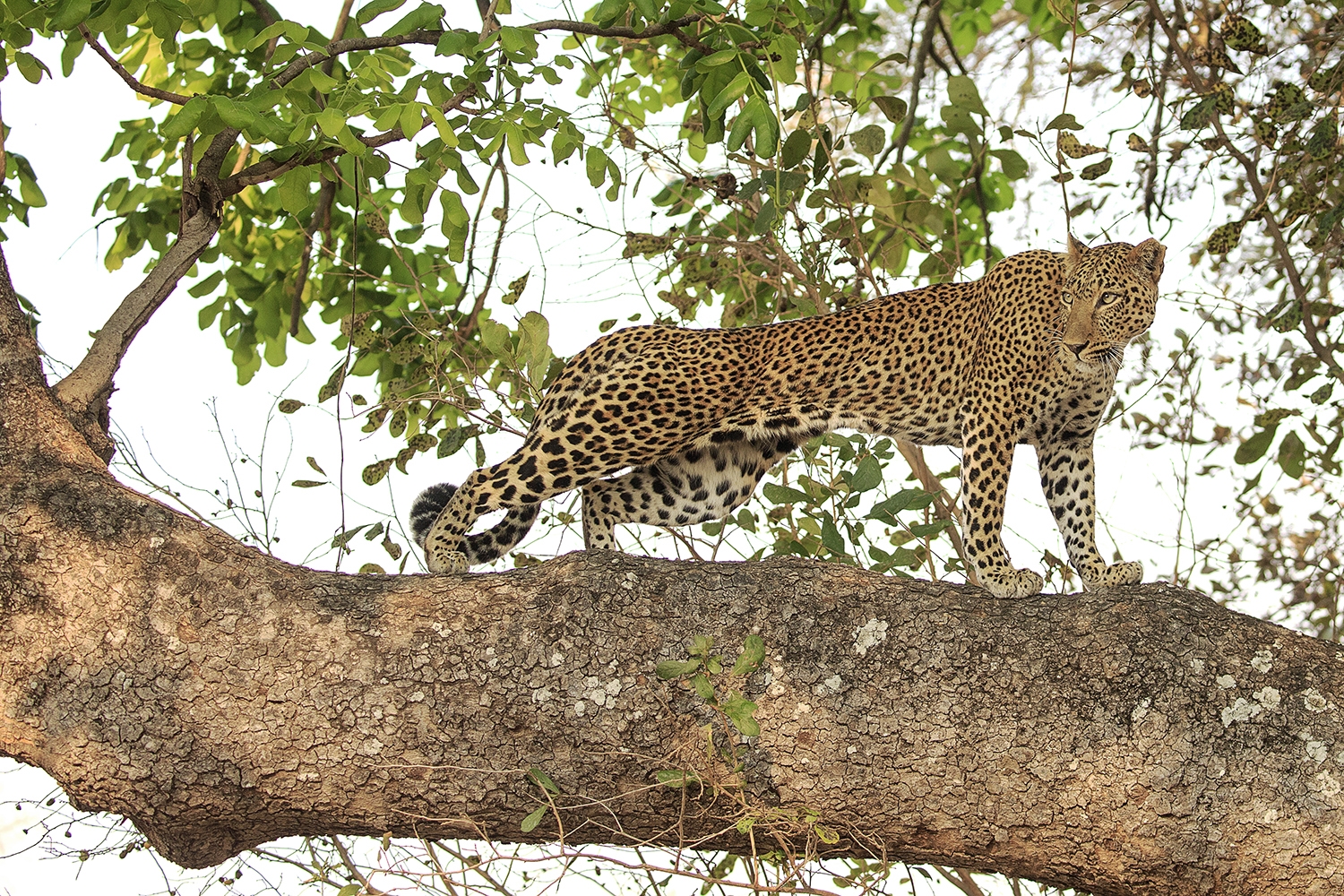
- Finally, our guide spotted a handsome leopard napping in a tree. Thrilled, we crept closer to enjoy the moment with her. Jos, who’d been on a few game drives, asked us to stay with her for a while. They’d witnessed a hunt the previous day, and we might get lucky.
Our guide agreed, and we were rewarded with her antics. Stretching for the camera, she feigned indifference to us.
Later, she used our vehicle as a decoy while stalking a herd of impala grazing nearby, unaware of the danger lurking among them.


We spent a good part of our allotted time with her. Unfortunately, she was unsuccessful in her hunt when the warthog shoved his nose into her affairs, almost running into her and causing a considerable hullabaloo that exposed her and alerted the impala, who sent a cacophony of snorts into the air. It was game over for our leopard, who lay down in the shade of a bush and fell asleep.


---oOo----
Night drives are always shrouded in mystery when nocturnal animals rouse from their sleep to see the light of day and shyly appear, rewarding us with a glimpse into their antics.
We were treated to a crocodile on the prowl, seeking greener pastures. Apparently, this is rare during the day, when they prefer to bask on the hot sand of a riverbank or float unobserved, waiting for prey. Interestingly, they can't hunt when on the hoof.


The spring hare, rarely spotted, was a surprise. Unfazed by our headlights, he posed for a few pictures before making off into the scrub.

Sundowners along the riverbank in the wild are always exciting. Who knew whose eyes would shine back at us when the guide swept his torchlight across the plains and the river?


---oOo---
We were rewarded with spectacular red African sunsets, the cry of the African fish eagle, and the lazy life on the riverbank. I loved our stay at Croc Valley Camp, and much of our enjoyment was thanks to Joon and Jos. Soon, on his way to South Africa, Joon peppered us with recommendations, reminding us again how privileged we were to call the Western Cape our home.


Keep travelling, Joon, and when you stop, we might knock on your door in Seoul, South Korea.

Like Jos, many South Africans live abroad yet love returning to Africa. Listening to their stories about life in London and the reasons for leaving our shores, which aren’t always political, is fascinating. Although it saddens me to think so many young professionals are working overseas, we are immensely proud of their achievements.
Jos, we hope to see you again. Who knows, Butch and Jos might enjoy the 2027 Rugby World Cup final and the Boks’ triumph, sitting at a bar somewhere remote again.
Jenny, we never met your illustrious cousin, but his brother-in-law, the manager, took great care of us and even made it possible for us to stay, even though the campsite was fully booked.


The Rotel truck stopped by for two nights, and it was a pleasure to meet the charming driver, Arthur from Kenia, and the tour leader, Katrin, a lady from the Netherlands living in Windhoek who has been a font of information, tips and recommendations. I loved her no-nonsense attitude and hutzpah; she’s been around the block a few times and told us in no uncertain terms what she thinks of border corruption and the shenanigans officials get up to to intimidate foreign tourists. At 6' tall, she doesn't take kindly to bullying.


Next time, I’d like to spend more time near the Luangwa National Park, and I regret that we didn’t extend our stay, not necessarily in the Park but along the river, where we could’ve wild-camped. C’est la vie.


---oOo---
The local village was a treat. After a few chores, filling the truck with diesel, and shopping and stocking up on fresh fruit and vegetables, Butch had to stop at the only coffee shop in town.


Run by an NGO with talented volunteers from all over the world who do three-month stints there, they not only help and teach the local crafters but also bring exciting innovations inspired by current international trends in colour, design and fashion for jewellery and décor, which can be translated and incorporated into the beautiful products produced by the ladies of the community.


Sitting on the veranda, enjoying our coffee and fresh, homemade bagel, and admiring the passing parade reminded us of similar establishments abroad or in South Africa. Fabulously fashionable, modern and skilfully curated.


We did not enjoy the cries of "Mzungu, give me money" from local children begging.

---oOo---
It was time to head north to Butch’s birthplace, Chingola, where he spent the first carefree decade of his life.


Our noses turned south, and early the next morning we headed for Lusaka once again. This time, we would be in transit through Lusaka. Once again, the naartjies sold at the traffic lights caught our attention. Sweet, packed with flavour and bursting with juice, we stockpiled a few.


Our route took us through the CBD. As in most African cities, the outskirts of town were a patchwork of informal townships, markets, small businesses, and industrial parks. The main business and banking districts are modern and organised, yet sprinkled with informal pavement entrepreneurs. The architecture is an eclectic mix of modern and colonial styles. I found the city friendly, colourful, and vibrant. Indeed, it is not as scary as we were led to believe.


---oOo---
Eureka Campsite, a stone’s throw from the town centre, was our first stop for two nights’ R&R.


The Honey Badger had some maintenance issues that the in-house maintenance man could handle while I explored.


Thatched roofs caught my eye. They’re traditional in these parts. Local thatch and grass are used, and, in keeping with tradition, the lodge’s chalets, administration buildings, and ablutions are all thatched.


Tarred poles infuse the interiors of buildings, and the high-pitched roofs and dark coolness offer inhabitants immediate protection and relief from the intense heat in these parts.


I was impressed by the many styles, shapes, curves, heights, and angles the artisans used to fashion unique roofs for all the buildings.


At sunset, we watched zebras graze in the garden, and in the morning, waterbuck visited us. Butch couldn't resist taking a shot at the monkeys, who were annoying.


Parked nearby was a solo overlander in his converted Land Cruiser. If truth be told, I think Butch would always opt for a Land Cruiser.

---oOo---
Back on the TanZam highway, we vowed to veer off as soon as possible, but we dreaded the Copper Belt roads, too. We’d heard that heavy vehicles had taken their toll on the roads, and the going would be slow.


To reward ourselves for making it out of Lusaka unscathed, we stopped at the Fringilla butchery, where we stocked up on beef, pies, biltong, boerewors (South African sausage) and spicy chilli bites.


This time, the pies were 100% perfect. Hot, crispy, golden shortcrust pastry casings were packed with filling and flavour. We loved every morsel and devoured them for lunch, picnicking by the busy main road and watching the world go by.


---oOo---
After a long day battling city traffic, busy ATMs, and poor road conditions, including secondary gravel roads, we stopped at a Catholic Church to ask whether we could wild camp. We were turned away.


We turned around and, a few miles back, found a campsite at Maggie’s Community Camp. The owner, charming, motherly Maggie, was the balm we needed. We spent only one night at Maggie’s compound, but we left with full hearts. Maggie’s smile as she mentioned her son, a medical doctor living in Germany, epitomised the smiles of mothers with children abroad.


I know how proud you are of your family, Maggie, even though they live so far away, but I admire your courage, tenacity, commitment and hard work in making it all possible. Thank you for treating us like family. Your warm hugs, advice and recommendations were exactly what the doctor ordered.


The next morning, Maggie and her assistant were up and dressed, ready to wave us off before she attended to her cattle, sheep, goats, and a brood of hens, then delegated tasks to her farm staff.

---oOo---


In every district, depending on the landscape and what is cultivated, locals have taken the initiative to develop various industries using local products. Basketry and weaving are widespread; the products are durable, aesthetically pleasing, and saleable. Unfortunately, I could only admire and shop through my lens.


---oOo---
Two nights sound extravagant, but for us, it is compulsory. A long day’s drive, spent concentrating constantly while dodging potholes, livestock, enormous vehicles, bicycles, and other vehicles, takes its toll on us.


Nsobe Game Camp was an oasis of tranquillity by the riverbank. Our stiff muscles ached, and we looked forward to our compulsory cycle the following day, when we would explore the beautiful game farm.


Road signs, speed limits, speed humps, and road cautions are "only a suggestion" to most road users on African roads. Road maps, whether printed or digital, are "only a suggestion" for us too. No matter how detailed, clear, or simple they are, we still tend to get lost.

Large anthills, decades old and the size of a house, were an eye-opener. Riding through this forest was tranquil as we pedalled gently around the farm.


The exclusive camp was the perfect spot for our snack and water break, and the manager was eager to show us around. The outdoor bathroom, his pride and joy, is a show-stopper!


I succumbed to the offer of a pedicure, a first in many months, and once again realised what I had been missing out on. These little treats my girlfriends take for granted. Stretched out and relaxed, I enjoyed the pampering as I watched monkeys swing in the trees, and white-faced whistling ducks float serenely, their beady eyes fixed on me.


My luscious, ruby-red, lacquered toes inspired Butch to invite me on a date night… how could I refuse? Dinner at the restaurant rounded off a perfect stopover. We were ready to tackle the next leg of our journey.


---oOo---

I have been jinxed, and as I write this blog, my mind wanders to the calamities that have befallen me over the past four weeks… I wonder whether they’re signs that I should take a break. I think not. I should write a book.
---oOo---


Comments


Topics
Latest Photos