Cutting Corners - Bagamoyo

We had our baby back, and we were back on the road. Whoop-whoop. Our mission was to head north from Dar es Salaam to Bagamoyo and slowly dance up to Tanga to keep a promise. The Honey Badger was in good form, but Butch reported it still veered slightly to the left when braking.


A break from the everyday routine is excellent, but being “home” is bliss, and we were thrilled to be back in our truck. There’s nothing quite as comforting as sleeping in your own bed, is there? I couldn't wait to wrap myself in my Indian cotton sheet. Our girl was going like the wind.


There’s always some stocking up to do, and it was a surprise to see the Woolworths sign. But this time, we were only going for a quick bite. Butch reminded me once I’d tucked into my hamburger and chips, a treat I’d not had for many months. All thoughts of my Woolworths addiction flew out the window. Anyway, I do prefer shopping at the village markets now.


We flew through the colourful green countryside, hoping to reach our campsite before sunset. Three maps gave us directions, and our ETA was late afternoon. I crocheted while we listened to our latest Audible book.


The town, with the loveliest name, Bagamoyo – which means "lay down your heart" or, if you were destined for slavery, "lay down your life" – was once an important trading port and the capital of German East Africa. It was a stopover for slave and ivory caravans travelling from Lake Tanganyika to Zanzibar.

The town has historic buildings that the German Colonial Administration used from the 18th to the 19th centuries. Bagamoyo is a historic coastal town founded at the end of the 18th century, though it is an extension of the much older Swahili settlement of Kaole.
In our excitement, we missed the first turnoff to the Traveller's Lodge campsite on the outskirts of town, and while the GPS suggested a U-turn, another map App told us to turn left in the village.

The quaint, narrow streets and cobblestones, lined with historic buildings and an exciting-looking B&B, the Firefly, sparked our interest and fuelled our elation.

---oOo---
Butch slowed down and turned into a very narrow street, turning the steering wheel to the limit while slowing further to avoid the hotel’s veranda corner on the right. I looked up to make sure we didn’t hit the electrical cable looping from one streetlamp to the next. All clear.

The truck screeched, protesting the tight corner. Keeping our eyes fixed on the side mirrors, we checked our side clearance when an almighty thump and crash reverberated through the undercarriage. Too late, I shouted, “Stop”, having experienced a similar gut-wrenching screech when our steps were ripped from the truck in the Richtersveld. The truck came to a sudden, thumping, shuddering halt. We both took a few seconds to stop bouncing in our seats. Cutting that corner put us in a pickle.

The left rear wheel was wedged in a stormwater gully, and the truck rested on its back axle. The corner electrical light pole appeared to be preventing the truck from tipping over, a godsend that later proved a setback.


Within minutes, inquisitive neighbours gathered around us after hearing the commotion. The discussion began in Swahili as more people arrived to offer advice, opinions and help.

Butch kept his wits about him while I slunk off to watch from a distance. I was hiding behind a pillar on a narrow balcony. From this vantage point, I could watch the shenanigans unfold. Not everyone thought a truck in a ditch was amusing. Cars, bikes and bejajs ferrying passengers home from work hooted furiously and gesticulated impatiently at the growing crowd filling the street. This set another ball rolling as explanations were hurled back and forth.

Meanwhile, Butch had a gang of men surrounding him, offering opinions and arguing back and forth when they disagreed with their cohorts. Any reasonable person would’ve been bamboozled by the cacophony of rapid-fire Swahili as the sun set and the remaining street lights flickered on.


Butch, calm as a cucumber, listened, arms folded. This must’ve taken great discipline, since he’s not a man who often takes advice. They had to lift the truck out of the slot. Men peered under and alongside the truck and decided to hoist the wheel and place stones beneath it. Impossible: the fit was too tight, the jack too skimpy for the job, the rocks too small, and the truck ridiculously heavy.

Butch unpacked his tools from the hatches; they found the jack and tried it, but the axle was in a precarious position and too unstable. I feared for the young man’s life who volunteered to crawl under the truck to set up the jack. Thankfully, that idea failed.
Wives, children, husbands, brothers, sisters, and colleagues, young and old, filled the street as night fell. If no truck were stuck in the mud, one might’ve thought a carnival was starting up. At last, the village chief of police arrived. He managed to quiet everyone down, and negotiations began over the price of the labour offered.
They agreed that Butch would employ four men, who would be paid for their time, advice, and elbow grease. No amount of pushing and shoving could budge the truck. A Land Cruiser tried to tow her out, but to no avail.

Dissatisfied neighbours started complaining about the streetlight. The Officer assured the squabbling ladies that he’d see to it that we paid for the repairs.


After much head-butting and head-scratching, someone suggested asking the road-building engineers whether we could hire the grader for towing. It certainly had the power to do so. We all agreed it was an excellent suggestion.


Half an hour later, we heard the deep growl of a SEM (Chinese) grader slowly making its way down the narrow street.

The SEM operators got to work, ignoring the agitated hullabaloo in the street. They had only one mission: to pull the obstruction from the stormwater ditch. Once they attached the tow rope to the tow hitch, they ordered Butch into his driver’s seat and told him to prepare for the yank.


The starter alert was the black cloud of billowing exhaust fumes spewed from the machine and the growling rumble of the powerful engine. They were ready for action. Slowly, slowly (pole pole), the grader's wheels inched backwards, then accelerated as soon as they found the truck’s traction.


The truck shot out of the ditch in the blink of an eye. Butch had to steer clear of the dozer while narrowly avoiding a wall, pedestrians and onlookers. The whole exercise was over within seconds.

The crowd surged forward; some demanded payment for their efforts, while others wanted to know when the streetlight would be repaired. Knowing his community, the police officer advised us to leave as soon as possible. I agreed.

There is always an opportunist in a crowd. When Butch removed his toolbox, they took our black cast iron Dutch oven too and placed it in the wood box like a dangling carrot. When you’re dirt poor and an irresistible opportunity presents itself, the coast is clear, and everyone’s attention is elsewhere; he must’ve thought an old black pot wouldn’t be missed.
Sadly, for him, luckily for us, someone spotted his flighty fingers and confronted the thief. We were in the clear, but all hell broke loose for him. The crowd turned on him in a flash, and the tongue-lashing he got brought him to his knees. With a measure of defiance, he reluctantly handed the pot to his accusers, who ceremoniously returned it to me.
This was, I think, a kangaroo court. Not pleasant. His shame and humiliation were palpable as he slinked off into the night while his townsfolk booed and shamed him.
---oOo---
At the Traveller's Lodge campsite, we were joined by the dapper police Officer for supper, where we got to know him better, settled our debts, and negotiated a price for the damage to the lamppost.
Fortunately, the Honey Badger didn’t suffer severe damage, and the wheel remained intact. We were exhausted but pleased we could go to bed knowing we’d settled scores and grateful the truck had got off lightly.
---oOo---


We agreed we’d lie in late; we needed to recover after our ordeal. I had been looking forward to exploring Bagamoyo. On our bikes, we set off, first to make a turn at the ATM, then to explore and grab coffee, and finally to head to the harbour to buy a fresh catch of the day.


Our foray into the village didn’t go well—the after-effects of our traumatic experience the previous day lingered. I lost Butch and went in search of him; he took another turn and went in search of me. A cat chasing its tail. Eventually, he found me. I am embarrassed to admit that we had a domestic on a corner of a busy street on a Saturday morning in Bagamoyo. I lost my appetite for a morning coffee, but we found fresh fish.


I seem to recall a misunderstanding with the fishmonger; the man who wasn't the fisherman quoted us a price, and we had to renegotiate. Where did it all go so wrong? Lost in translation. As I understand it, both the fish cleaner and the fisherman needed to be recompensed. Far too complicated, especially when one hasn't put the previous day's devilry to bed.

We spent three nights in Bagamoyo. We never went for a walk, nor did we explore the village. I walked down to the beach each day to look at the boats, watch children swim, and enjoy the solitude, the sun, and the salt on my skin. How could I be there, a true Cancerian, and not go down to the water's edge?


But for the most part, I had some catching up to do, spending most of my days writing, cleaning, cooking, doing the laundry, and catching up on all my domestic chores before we set off to fulfil a promise to a dear friend and to celebrate my birthday.


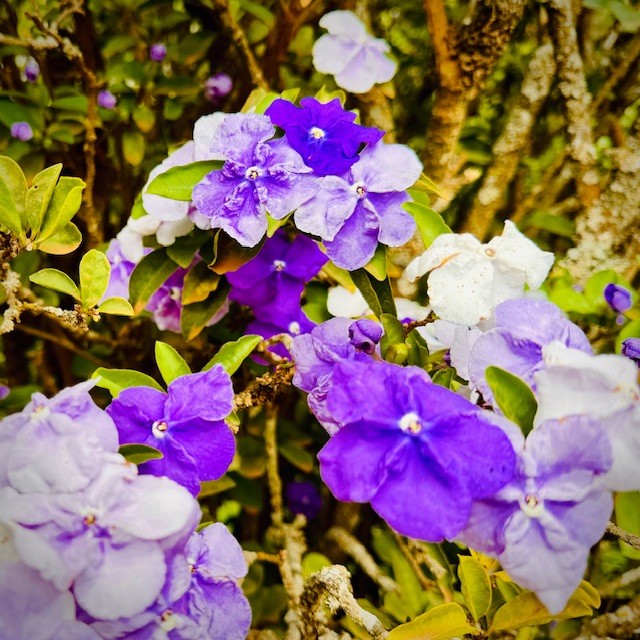
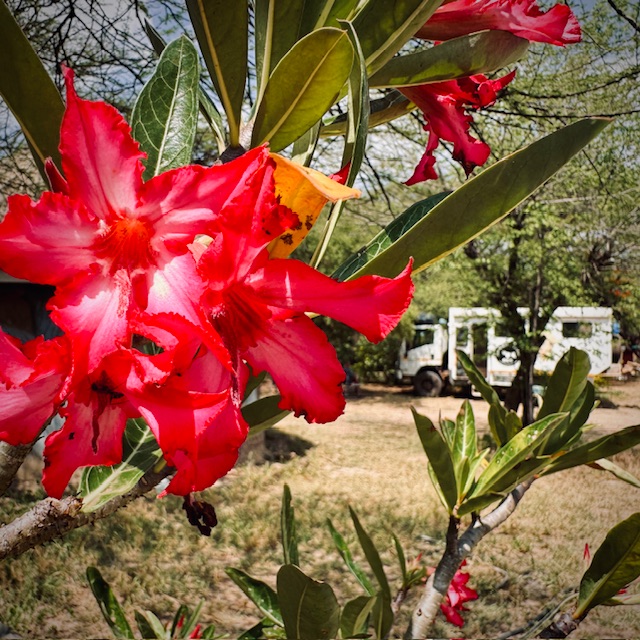
The campsite, set in park-like surroundings, was a forest of indigenous trees, palms, and subtropical shrubbery, and it filled up while we were there. We met an exciting German couple in their blue vintage truck and a French couple in a rather lovely luxury motorhome, both families with small children. What an experience for those kids. I wish I’d had the chutzpah to do likewise when my children were small.


Although beautiful, with beach access and very close to the village, the resort isn't geared toward campers. Thankfully, the owners allow campers, but there are no proper facilities; for example, there are no designated ablutions, kitchen, or scullery for campers. We could make use of a bathroom, which was quite a walk from our campsite. We were later told that the spot where we'd parked was not a campsite either. Hakuna matata.


---oOo---


Today we are hundreds of miles from Bagamoyo. The last week has been traumatic and one for the books. Unfortunately, time to tell my story is not on my side, but do not fear. Without cutting corners, I will reveal everything. Finally, we have learnt, to our detriment, that we cannot prognosticate probable outcomes with any reasonable degree of certainty.


Comments


Topics
Latest Photos