Glamping in the Kgalagadi Trans Frontier Park
Butch and I have never camped at a SANParks campsite. We prefer to stay off-grid or wild camp, as people do in Botswana and Zimbabwe. Without a doubt, our favourite campsites are Polentswa and Rooiputs on the Botswana side. This time, we were putting SANParks to the test.

The corrugated dirt roads of the Kgalagadi are notorious. With our fuel tanks brimming and our tyres deflated to 1.6 bar, we set off from Twee Rivieren towards Nossob.

Ready for action, our cameras set up and my Winpro straddling the open windowpane. We couldn’t quite decide whether to go slow or pick up speed while staying within the 50 km/h limit. Butch thought it wise to keep below 1000 revs and grind on, regardless.


Park management has been busy during lockdown. On most roads, the grader driver was at it, slowly but surely making his way north to Union’s End. The only problem was that he was only covering the corrugations with Kalahari sand. His blades were not flattening the ruts. The result: no sooner had he smoothed the road than it was back to “normal”. My suggestion – lower your blades, Buddy.

We arrived at Nossob at midday. We checked in and followed all the necessary Covid19 protocols before selecting our campsite. We were horribly late; seasoned Kgalagadi campers had arrived much earlier. All the shady areas were taken. A tree in the Kalahari is like gold, to be treasured. Chris and Marie stood with shoulders slumped, despondent, surveying the two available spaces. Marie was not impressed but had to knuckle down and set up their caravan. Willem and Elmien, old friends, spotted us before we’d pulled up the handbrake. We parked, unpacked our table and chairs, and knocked in our ground cover.

It was my turn to prepare supper that evening. But before we could do anything else, we had to get into the pool.

The pool was the place to be. After a few strokes, dunks, paddles and gentle dives, we’d find a spot along the edge, hook our arms over the kerbs, settle and chat. At the “waterhole” we exchanged information. Where the best sightings were, what to expect, which lioness had cubs, how many cheetahs, lions, and leopards were seen that day, and who had survived the night. No animal in the Park was safe; we’d interrogate until we knew their every move. We heard about the Spotted Eagle owls nesting and the cheetah orphans; we knew exactly where the Bateleurs would be at noon. We identified the Kalahari Scrub-Robin, a pretty daily visitor, and tracked the snakes' movements. The sand shoveller and the Cape Cobra I saw were the largest.


Every day we’d return to catch up with our new best friends. Because we all shared similar interests, were campers, and enjoyed the outdoors, we soon found common ground with most people as they cooled down. We’d see the Van Heerden’s from Triggerfish Brewing in Somerset West. Our neighbour, Melissa, could identify a bird high in the sky; she’d point out Lanner falcons on the hunt and search high and low for the Red-necked Falcon.

While spotting and spending time with the animals was our intention, I believe the people we met and spent time with were among my highlights. I would deliberately seek out Callie Calitz while I waited in the queue for our daily pass; his route suggestions were always spot on.
Rikus Visser, a guide based in Cape Town, would accurately tell us where he’d spotted a leopard or cheetah. Seeing his vehicle’s red brake lights was a clear tip-off, and we’d never be disappointed by a sighting.


Alet is a highly accomplished photographer from the Bethal Photographic Club; she inspired us to look more closely, set out earlier to catch the golden hour, stay out later to witness a true Kalahari sunset, and linger for the blue hour.


Our stay at Nossob campsite couldn’t have been better. On the second day, Marie found a better campsite with a magnificent tree, and we all moved in and set ourselves up for 10 days of sheer bliss. On most days, we’d have a Honey Badger “open house” so interested overlanders could come and browse our living quarters. Annette and Gerhard, also overlanders, with their troupe of children delighted us as they explored every inch of our camper. The crawl-through fascinated them: “Imagine going from your house to the driver’s seat, Mom. That’s so cool!” said the littlest one. Later, with more confidence, he was the first to climb the ladder onto the roof, where we had a bird’s-eye view.
From the mouth of babes, I was told about a Projector app and that the movie Holiday in the Wild is highly recommended. I promised it would be the first one we show once we’ve set ourselves up to watch movies on the truck’s side panel!

Butch braaied when it was our turn to prepare supper, flipping perfectly rare steaks, mutton chops with crispy rinds, juicy sausages, and chicken Espetadas that ticked every flavour box. His pork belly crackled and crunched with every bite. And then… Butch offered to do the dishes.

In the scullery, he became a raconteur for a lively audience who hung on his every word. During one of these conversations, he mentioned our desire to extend our stay at Nossob rather than travelling back and forth to Mata Mata. A beautiful young woman, her hands plunged into hot suds, immediately came up with a solution. Their party had an extra, unused campsite, paid up, and we could use it. Butch returned with a swagger, a grin and good news.
Two days later, it was my turn to cook supper for four; we were missing two sets of cutlery and four enamel plates. Not only that, but I’d also not recovered from the loss of my iconic, favourite, old, floppy straw hat.
Travelling in the Honey Badger is fun, especially because we adhere to the saying “He who travels light, travels far.” In a frenzy, I started unpacking drawers and cupboards, searching for my lost belongings, thinking I’d misplaced them. I couldn’t afford to lose a single item; we had mouths to feed, and there were only two sets of cutlery in the drawer and no plates.

On my high horse, I hot-footed it to the ablutions to check; nada. Butch had a momentary lapse of memory and couldn’t, for the life of him, remember anything except the gorgeous, friendly young lady. I swallowed, counted to ten, and kept schtum, rolling my eyes. That evening, I was back on scullery duty, and at sunset, Butch was hanging his laundry to dry.


The scullery is a favourite meeting place for sociable campers to discuss the day's events. After thoroughly scanning the room, I plucked up the courage to ask whether anyone had seen my missing cutlery and plates. The housekeeper, Erica, said she had seen them and that everything was safe in the storeroom. My hat was there too!
Butch and I wake up long before the sun rises, which is perfect when camping in a park. When the gates open, we’re ready to roll. Every morning I’d take a brisk walk to the reception area, and Butch would follow once he’d checked that all the hatches, drawers and doors were secured. On day 5, he mentioned that the truck wasn’t firing up as she should, but he soon pushed the thought aside. The next day, he cranked her, and all she did was whine. After a few attempts and a bit of pumping, she fired up but spluttered to death when he stopped to pick me up. Help was needed.

Fortunately, the maintenance crews in the Park are tip-top; soon, Pieter and his assistant were there to diagnose and fix the problem. “She’d swallowed a wind” in the fuel line (wind gesluk). They got to work, tightened what needed tightening, and we were on our way. On his way home later, Pieter found us near a waterhole, stopped, and asked if we were ok. He predicted that the lions would be back that night; they were. Things happen in threes. Shortly afterwards, we discovered our radio didn't work, and then our GPS flatlined. It wasn't the fuses, but Butch checked, and it was a complicated relay system situated somewhere inside the dashboard. He didn't fiddle.
The management of the Nossob camp is first-class. The campsites are well maintained, and every day we saw crews working hard. In the ablutions, they kept the highest standards, in line with the Government’s Covid-19 guidelines. Shower cubicles, lavatories and washbasins were equipped with sanitisers. There was never a shortage of paper towels, toilet paper or feminine hygiene bins.
The housekeepers, like Erica, were always masked; they attended to the ablutions regularly, and nothing was ever out of place. Although I’m sure guests can be troublesome and demanding, I never saw an unwilling or unfriendly staff member. I know Erica went out of her way to make sure I got my hat back.

All the Park’s rest camps have been upgraded, restored and refurbished. New ablutions, shopping and administrative complexes have been provided and upgraded. Basic groceries, ice, a good selection of cold drinks and alcohol are available. There are books, maps, cuddly toys, a clothing range and jewellery to satisfy all our shopping needs.
All the camps have Wi-Fi access, but it’s SLOW and not worth it unless you're desperate to contact family or upload a photograph on WhatsApp. I found it frustrating. The lady who bakes delicious fresh bread and makes Askoek (a bread roll cooked over coals) also offers a very reasonable laundry service. Guests may store and plug in their travel refrigerators in the scullery.


---oOo---
We only spent two nights at Mata-Mata; it was very enjoyable, but the campsites are a tad disorganised, with no clear demarcations. We probably missed them unless the braai stand is the indicator!


Once again, our stay was defined by the people we met there, and, of course, seeing Heike and Clint was a highlight. I met an NBF in the pool, but we didn’t stay long enough to introduce ourselves. I was nearing the end of my book, so I was more interested in that. Sorry.
Mark, a very easy-going, sociable guy, was very generous with his sightings. Meeting Lisa, Mark’s American wife, was an unexpected bonus. Lisa’s Mum, an avid reader, instilled a love of Africa in her, and as a small child she made a pact to immigrate to Africa the day she left school, which she did. The tales she could tell of her adventures were intriguing. Lisa, an educator and NGO worker, works tirelessly to educate women in many SADC countries and spins a mesmerising story.

As the year rolls relentlessly towards 2021, we're determined to see all our new friends. They’re like-minded, clever, interesting and accomplished in their fields, and we’re sure we’ll all get along like a house on fire.

---oOo---
Twee Rivieren is just a transit camp. After two weeks in the bush, it felt as if we’d returned to the bustle of city life. Too crowded, too commercial, too busy. But we did get reacquainted with a long-lost friend, Gina, Corius, and their delightful son Christian. I was so happy to catch up with them again, and I hope it will not be the last time.


---oOo---
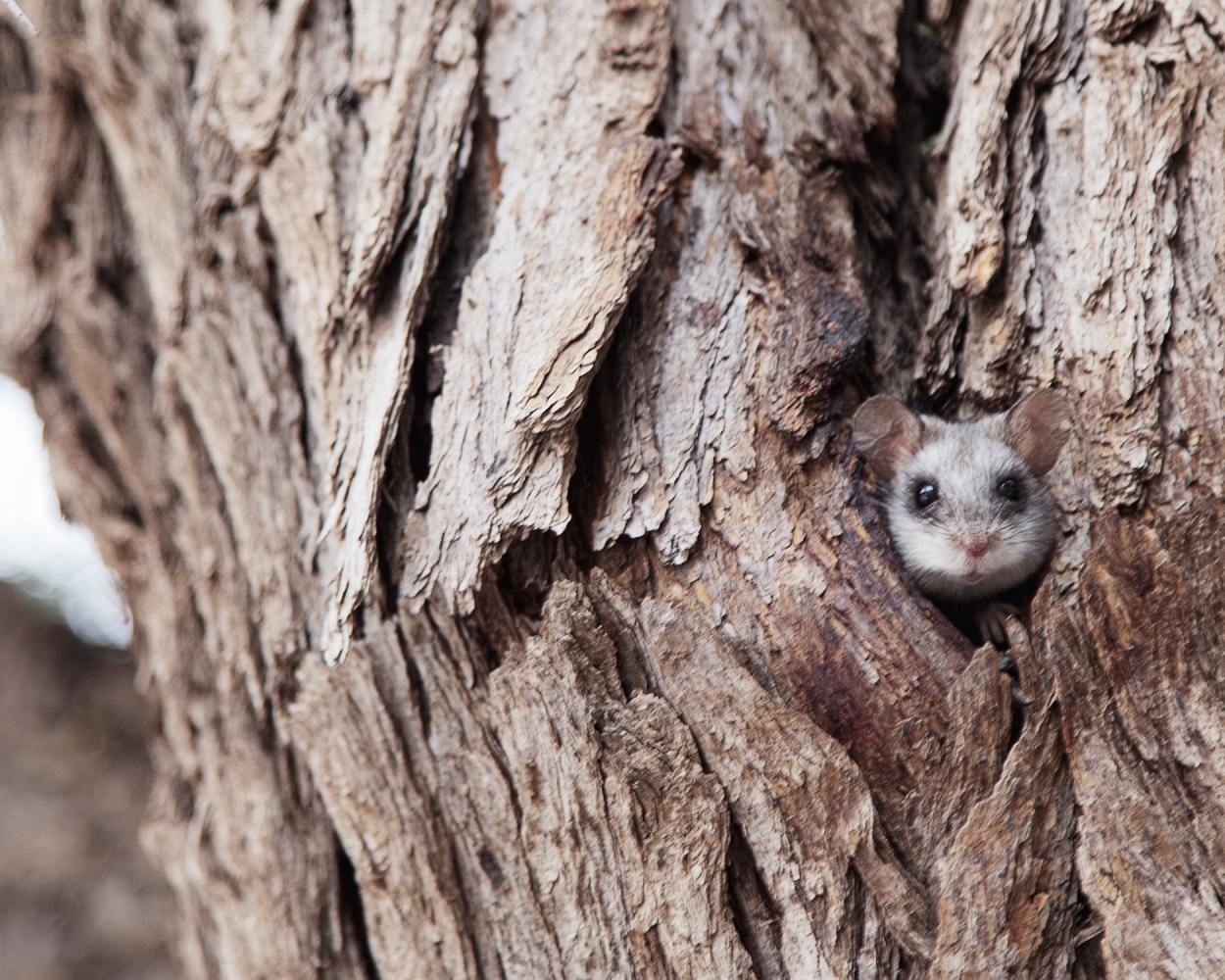
The internet is flooded with beautiful photographs of the Kalahari, the animals, birds, and small and large things. We had the pleasure of seeing almost all the cats, and we recorded 45 bird species. Giraffes grazed lazily while we had coffee, and wildebeest kicked up a cloud of dust while skittish Springbok kept watch, never letting their guard down. We didn’t see a honey badger, but we saw snakes and the cutest Southern African Black-tailed Tree Rat (Thallomys paedulcus). We enjoyed many hours watching meerkats, Ground Squirrels and ostriches. One night, my patience was rewarded, and for one hour I watched 12 lions interact at the Nossob waterhole.


A Western Barn Owl teased and vexed a young male lion, egging him on. She was too fast for him, escaping his vicious paws and leaps. Once again, we’re unanimous about who’s at the top of the food chain. It’s not Homo sapiens.

We frequented all the waterholes; sometimes we’d stop to check, have a coffee and rusks, then move on; sometimes we’d stay and enjoy our brunch or lunch with the animals quenching their thirst. We watched eagles hunt and scavengers prowl. Our binoculars and cameras were always ready. Occasionally, we even took a siesta during the hottest hours. Our picnic basket produced scrumptious meals and treats galore. We saw Secretary birds and Vultures fighting for territory, then interacting and courting, all while oblivious to the antics of the black-backed Jackal hunting.


The veld stood tall with dried grasses, and as we watched, acacias came into leaf. On a sultry afternoon, we saw storm clouds build up and crash as thunder and lightning filled the skies. Gale-force winds whipped up dust that swept across the ochre plains. A refreshing cloudburst followed, cooling the scorched earth.


---oOo--
My mind runs amok as we sit at waterholes; on one occasion, I vividly recalled our picnics in Kruger Park as children. We called it Padkos (travel food). My mother took great pains to prepare the picnic basket, and we spent hours in the kitchen, toiling in front of the hot Aga stove, getting our hard-boiled eggs just right, the frikkedel perfectly brown, and the chicken drumsticks sticky. She baked sourdough bread and churned thick cream into butter. In the huge copper saucepan, mulberry jam bubbled away until it reached the right consistency. She would drip a teaspoon of hot jelly into methylated spirits to test the pectin.

Our picnics were always special, but when my father, on a rare occasion, produced two tubes of sweets, one a line of Fruit Gums and the other a tube of Fruit Pastilles, we’d think it was Christmas. The rule was that my brothers and I could choose three sweets from each tube. Six sweets. I’d always go for the green, the black and, to be charitable, a yellow one. We’d suck all the sugar off and see how translucent we could make the gums before they disintegrated on the tip of our tongues. We’d clench the sweets in our sweaty palms, savouring each one until our hands were sugar-coated and sticky.

Butch was reminded of their special treat, a trip to a nearby town in Northern Rhodesia (as he insists on calling it), to enjoy ice-cream cones at the Dairy Queen.

---oOo---
My conclusion. As adults, we lose our sense of wonder and stop feeling excited or inspired because we are flooded with everything our hearts desire; we are overloaded with information, our material desires are instantly gratified, and we become complacent. During our Covid19 lockdown, we were unexpectedly brought down to earth; we were deprived of our freedom to move and socialise, and suddenly had to be responsible for others' health while keeping ourselves safe. Wearing masks makes us anonymous.

Being in the Kalahari, where extreme heat, a lack of palatable water, and a landscape devoid of exotic vegetation mean only the strongest survive, brought home the reality of simplicity: how we become better and nicer people when we are stripped of our luxuries. The surprise of six sweeties was joyous; a whole packet makes me gluttonous. We all realised three things: we missed being in nature, we missed human contact, and nature didn’t miss us at all. We did well and returned to the coalface refreshed.


Tragedy struck when I tried to download the last of my SanDisk memory cards. My hard drive gave up the ghost, and I lost two years’ worth of photographs. I was devastated, in shock and speechless. Thankfully, Butch always comes to my rescue. The hard drive is currently with an IT professional who believes he can retrieve my photographs.


Comments


Topics
Latest Photos