Roadtripping From Our Southern Shores to The Mighty Zambezi

On a fine Friday afternoon, we were all packed and excited to set off on our 5-day road trip from the southern tip of South Africa to the northernmost border of Zimbabwe, where our journey would end on the banks of the mighty Zambezi.


Our first stop was Matjiesfontein, where we immersed ourselves in local history and culture, sparking connection and curiosity among our audience. We arrived at the Lord Milner Hotel shortly before sunset and settled in with a sundowner in the atmospheric bar, cosy with a roaring fire in the grate.
The resident pianist entertained us with honky-tonk tunes, having played for guests for eons. Soon enough, a group of musicians on their way to Prince Albert joined the fun and serenaded us with beautiful Irish folk songs. We enjoyed a lovely meal with other patrons in the dining room and returned to the bar for a nightcap before settling down for the night in the Honey Badger.


We’d hardly stripped when there was an insistent knock at the door—Security. Under no circumstances were we to sleep in their car park. No matter how persuasively Butch tried to reason, he got nowhere and went off to speak to management. He returned with the duty manager in tow.
We had two choices: 1. We could stay in the hotel at no charge as guests of the hotel, or 2. We had to move along. So we took our ball and moved. Just 500 m back. We slept like babies and set off early the next morning, grateful for our flexibility and resilience in the face of unexpected challenges.


Keeping in mind that the Honey Badger is a huge 4x4 diesel truck, we made good progress. If I recall, our average speed on the N1 was around 90 km/h, which was good. I knitted; we listened to our Audible audiobooks, often dipped into our snack box, and hydrated regularly. Our diesel consumption was excellent and compared favourably with the Land Cruiser. Regular stops to stretch and meet up with our travelling companions, Chris and Marie, made the journey very pleasant.

We spent our second night camping just off the N1 south of Kimberley, surrounded by the vast, open landscape that made us feel connected to the wilderness. If things could continue in this vein, I’ll never complain about dodgy lodgings again. Camping was the way to go. After supporting the Springboks in the pub, we had an early supper and read before dropping off to sleep in our divine bed. Witnessing an African sunrise is always a pleasure as we headed ever north towards Beit Bridge. We could slip off our warm jackets, scarves and beanies as the sun flooded in and warmed us early in the day, filling us with awe and excitement for what lay ahead.


Driving through Kimberley's downtown is always disturbing, as it's really gone seedy and the roads are confusing; we even mistrust the GPS and often make wrong turns.

We spent our third evening at Klein Kariba, just north of Bela Bela. A very clean, well-run camp, and we can recommend this spot to travellers. Monkeys, squirrels, some antelope and warthogs roamed freely, giving us our first taste of 'the bush'. For safety, we carried emergency supplies and local contact numbers, which reassured us in this remote area. Avenues of large trees and shrubs grow abundantly in this very fertile climate.

The next day, we made a quick trip to Tshpise, just south of the border. It was here that we witnessed our first-ever CRIME SCENE; my beloved thought the ambulance, police vehicles, and pathologists' panel van were signs of a convention. But he'd not seen the crime scene tape! We soon settled down and enjoyed the peace of this popular campground. I couldn't resist the shop, always finding something I "need"!

We were eager to cross into Zimbabwe as early as possible, before the fully laden buses, trucks, and minibuses arrived. After a painless interlude at Customs and Immigration, where we used Zimbabwe Tourism's official to streamline the process, we learned a few local phrases to ease communication. He explained in the local language that our vehicle was a motorised caravan, not a commercial delivery truck, which helped at toll gates. Be prepared for discussions about vehicle classification, as they are common at border crossings.

We stopped to celebrate and enjoy lunch under the huge wild fig trees on the banks of the river at the Lion and Elephant. We enjoyed a surprisingly good hamburger at this once-popular watering hole. I spoke with the manager and his wife; they have been there since 1974, taking over from the owner who’d relocated. That helped me form a mental timeline—the décor, furnishings, and architecture date back to the 60s. Clocks stopped here ages ago; the cement corridors are still brushed to a high gloss, and the pungent smell of red floor polish lingers in the air.

The A18 'shortcut' to Gweru was a bit of a nightmare. Potholed, bumpy, dangerous, and little more than a single track, we had to grind our way forward, swerving, zigzagging, and bumping along. To navigate safely, we drove slowly and stayed alert for goats and cattle crossing freely. The only redeeming feature was that hardly any other vehicles were on the road, giving us space to manoeuvre. We arrived in Gweru tired, bone-weary, and disgruntled, but prepared for the next leg of our journey.


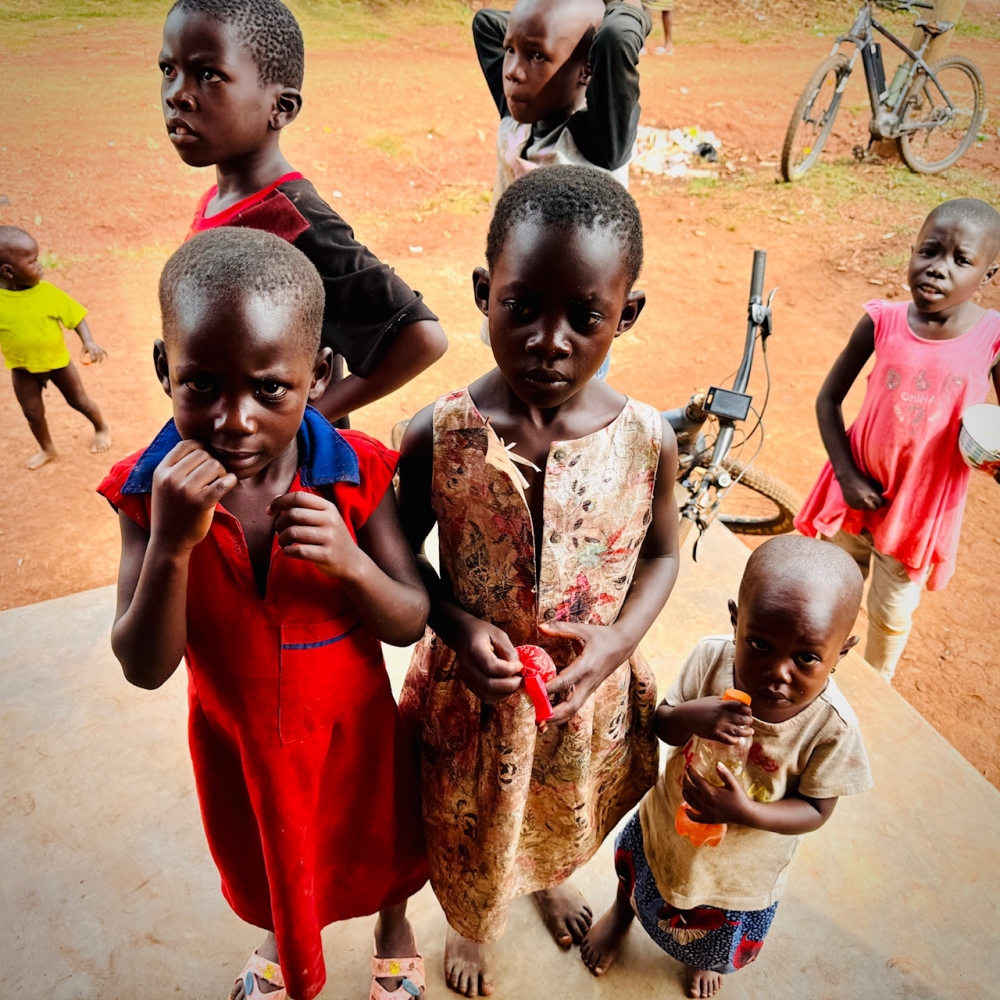
I was dropping stitches, so I abandoned my knitting and couldn't concentrate on our audiobook, which gave me plenty of time to contemplate the state of affairs around me. The landscape was desolate and isolated, dotted with traditional grass and mud huts or the skeletons of brick-and-mortar homes. Settlements were scattered, small and desperately poor. Subsistence farming was the only form of agriculture, with small herds of cattle, goats and brays of donkeys—all free-roaming. Here and there, we noticed small children carrying plastic containers of water on their heads, their clothing threadbare and filthy.
Despite their circumstances, they were friendly, laughing with easy, carefree banter among themselves. The dust, oppressive heat, leafless trees, bare earth and poverty gripped me as a black cloud of helplessness settled over me.


I found the situation depressing. A sense of helpless, sluggish despondency hung in the air, which was understandable under the circumstances. Almost every tree had an election poster stapled to it, and election booths were advertised with glee. The election was long past, and by all accounts nothing had changed, nor would it. In fact, the chances were good that Zimbabweans' situation would only worsen. It was apocalyptic. One thing's for sure: should Armageddon befall the West, Africa, especially countries like Zimbabwe, would probably weather the storm far better than our pampered, educated, prosperous counterparts. Life here had already hit rock bottom, and folk were taking it like punch-drunk boxers. Their subsistence farms would probably pull them through for a while. How their few cattle and goats would survive in the overgrazed pastures was for nature to see to when the rains came later.


Jacaranda trees in full bloom formed a canopy of mauve blossoms in Gweru, where we spent a delightful evening with friends Trevor and Essie, who spoilt us with a scrumptious braai and offered us a hot shower.
The next day we did our last-minute shopping at the local Pick ‘n Pay, a beautiful store with a wide variety of fresh fruit and veg and, of course, all the wonderful products we take for granted every day. We waved our hosts goodbye, leaving them with a list of goodies to bring when they joined us at Mana Pools. At Midlands Butchery, we ordered biltong, droewors, and steak. Their rump bones (the butcher’s choice) were delicious as a starter, and I wonder who can supply us locally?


On a few occasions, we stopped to buy fruit and vegetables from roadside sellers. The oranges were delicious and took me back to my childhood. Tough, thin-skinned Navel oranges with a brutal squirt of oil as you bit into the skin to start peeling. I had to smile as the corners of my mouth burned from the oil.
The trees bearing these oranges must've been planted five decades ago. Potatoes and sweet potatoes were huge, old-fashioned varieties too. They took a good scrubbing to rid them of the red earth clinging to them, then at least an hour and a half under red-hot coals to cook them! They were organic, all right.


Because we were spending four weeks at Mana Pools and would overstay our welcome in Zimbabwe, travellers were permitted to stay only 30 days. We had to have our passports checked and stamped at the nearest border post, Chirundu. We decided to camp on the banks of the Zambezi for 2 nights before heading into Mana Pools. Just as well. Zimbabwe had run out of fuel. Most small, rural fuel stations had no stock and were unsure when they'd be replenished.
Queues stretching for kilometres, filled with enormous trucks patiently waiting for fuel or to cross the border into Zambia, awaited us in Chirundu. Street talk was that the Zimbabwe Government had commandeered all the fuel and reserves for their election campaign. To restock, they needed money, which they didn’t have. We took this news with a shrug and went off to our campsite, where we’d either contemplate our navels or go tiger fishing, whichever came first. Jecha Point Fishing Lodge was where we’d spend a night or two getting all our ducks in a row before entering Mana Pools for a full calendar month.


We needed a day off after all the driving. Imagine elephants, hippos and antelope on the lawn. We went to bed with a hippo munching loudly and woke to an enormous bull elephant tugging at the acacia tree outside our window. We were in the bush. The mighty Zambezi was sluggishly flowing east, while early-morning tiger-fishing boats were revving their small engines to take guests on fishing charters. The smell of two-stroke fuel was pungent as we brewed our morning cuppa to enjoy in bed, with the windows wide open. Our holiday was settling in, and we could feel the nervous tension leave as our shoulders loosened and other cricks eased.


Butch and I spent the day photographing, calling and identifying birds while getting used to being in the wild again. We could let our hair down. Fuel news wasn’t good, and the delivery date and time were uncertain.

Our mission was to find the Customs official who could grant us an extension to our stay. Confidently, we marched into the Customs building, went up the stairs, and asked the chief executive officer for help. That took a while. He wasn’t particularly interested in our story and summoned his assistant executive officer, who explained, very eloquently, that we couldn't get an extension on the spot. We were to return a month later, a day or two before our 30 days expired. That’s when we’d be issued the extension. That was a bitter pill to swallow, since it wasn't the advice we were given at Beit Bridge. But suck it up; we did.


We went tiger fishing. Up and down the river, we ploughed, trying to hook the big one. Sadly, the fish were shy and uninterested in our lures and fresh bait. The cool breeze off the water, together with a spectacular sunset that coloured the sky and water in a rich rainbow of pinks and golds, made our put-putt back to camp welcome. We were still acclimatising as the mercury rose.


The next day we’d join the queue and wait for the diesel to arrive. This was Africa, after all, and we do enjoy an adventure. While we waited for the diesel, we decided to have lunch. We’d join other diners, mostly truckers, who were also waiting to fill up. I found a takeaway joint. The menu had two choices: a rich tomato-based fish stew or fried chicken. We opted for the chicken served with polenta (putupap). The portion was generous, the chicken was fried to perfection, and it was very reasonably priced. We washed our meal down with ice-cold Cokes and finished off with a Cadbury’s Lunch Bar. With groaning tummies and full diesel tanks, we made our way to Mana Pools. Upwards and onwards.


Comments


Topics
Latest Photos