Slow Food In Sutherland
Our last day in Sutherland was relaxed, with no rush or plans, just exploring and capturing spontaneous moments on my camera.

Call me macabre, but I love visiting graves; I imagine a knight lurking among the headstones. I tell them all that they’re remembered, especially the children and soldiers from Britain who defended their King and Empire, even though history has forgotten them. Lichen now enfolds them, like a parent's care. These headstones are the only evidence that these people once lived here.

We went for a walk on the farm, and it was so beautiful. We noticed minor details, imagining the landscape during the Boer War, with a few “forts” dotted around. One on the rise above the river seemed perfect for spotting the enemy while having a coffee; we could almost see the khaki lying in wait.

The river is no raging torrent, but it must’ve been eons ago, as the rock formations are quite spectacular. I wonder about this landscape and what it must’ve looked like a million years ago—probably an inland sea teeming with many wild things.

We see evidence of small buck, porcupines, and dassies, and I’m sure I spotted a leopard spoor too. From a small rise, we look down on the village, so quiet here; only the windmill is doing its slow dance, keeping time with the icy wind.

Shortly after another amazing Karoo sunset, we headed into town for supper. Here, everything closes by 21h00. I’m sure there’s an unwritten rule about lights out at 22h00.

I made two reservations before we set off to Sutherland. On our first evening there, we had supper at Cluster D’hôtel; the recommended dish is their traditional Slow-roasted Lamb Shank. We were received by the proprietor, who reminded me of the server in Dinner for One. The rather formal Victorian Dining Room had a pleasant fire going; I was transported back to the early 1900s, to places like Kimberley during the diamond rush. Our meal was a good home-cooked meal, nothing fancy but enjoyable.

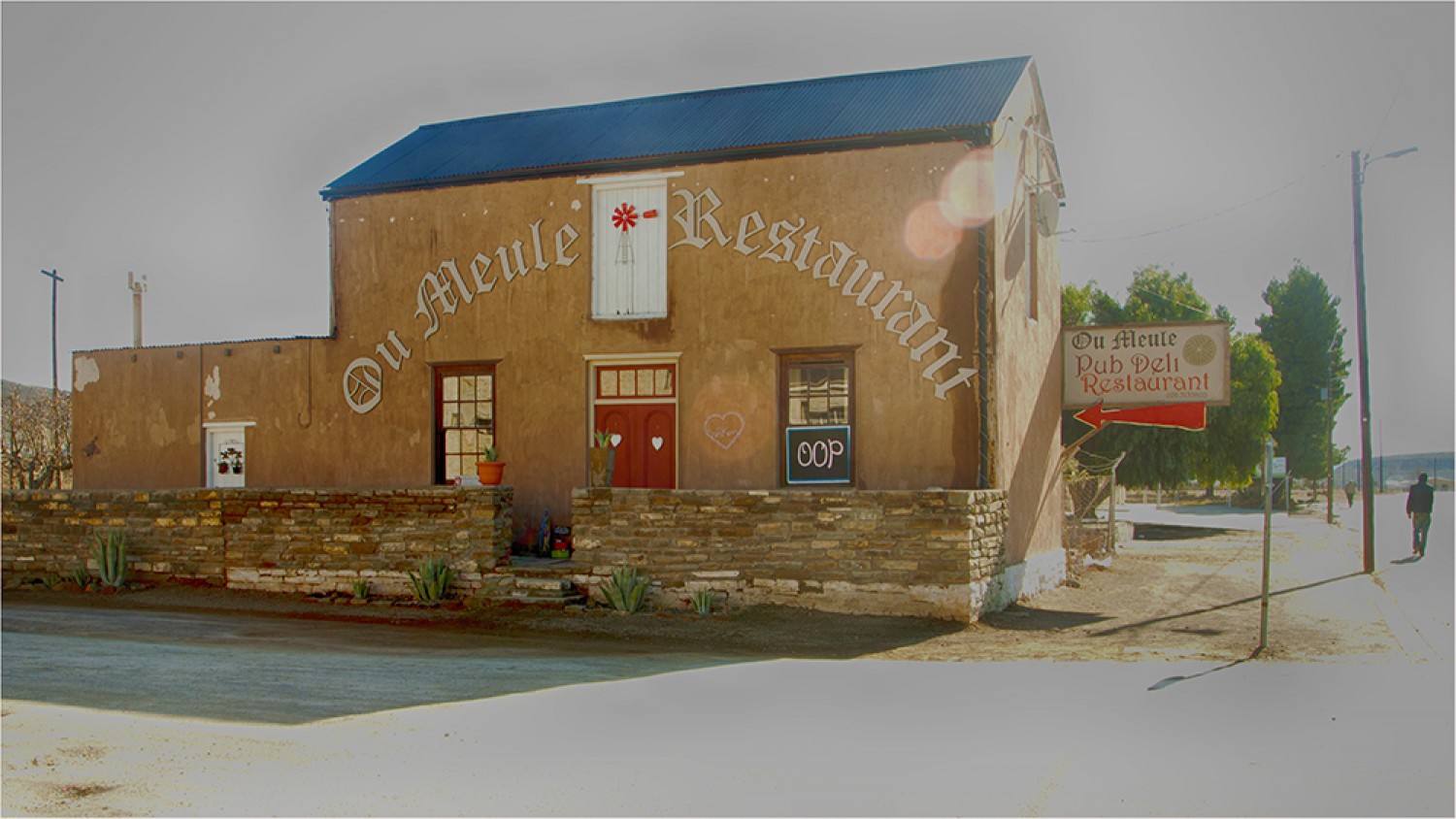
The second reservation I made was at the highly recommended Oue Meule restaurant. Informal and cosy, cheerful voices drifted from the small bar, and the publican was quick to settle us and offer me one of his shooter concoctions, which was excellent!
We would always prefer to indulge in local cuisine, so the offering of skilpaaitjies, aka lewer in netvet (tortoise - which is sheep's liver in caul fat), prepared beautifully and rounded off in a balsamic glaze, was perfect. Portions are large, we were told, and they are. For our main course, we both had curry and rice. Too much for me. Although prepared traditionally, it lacked flavour (I don't want to say this too loudly, but my helping was slightly burnt).
For a good Malay curry, my favourite ingredient would be lamb on the bone (skenkel). We had cubed leg of mutton, but our curry, although it was served with all the right condiments, disappointed. Next time it certainly will be the pizza; the locals recommend that. The evening ended on a very pleasant note in the bar chatting and getting all the insider gossip.
This will be my last gripe on the subject: what happened to "Karoo lamb" with its distinctive rosemary flavour? I wish eateries in the "country" and especially the Karoo would serve local cuisine; we don't drive hundreds of kilometres to dine on calamari and Kingklip, we salivate at the thought of having Curried Tripe, slow-roasted de-boned lamb's neck, Malay curries, bobotie and what could be nicer than a pot-roast, fall-off-the-bone leg of lamb? Of course, local diners are your bread and butter, and their eyes look for "town" food. Just one or two delicious delights on a chalkboard would do for us.
In Paternoster, local anglers' wives sell fish and chips in paper and do a roaring trade at the market. I'm sure many fantastic local ladies across South Africa would jump at the chance to supply restaurants with good home-cooked meals.
We’ve got the hang of the bed; we’ll sleep easy tonight.

Comments


Topics
Latest Photos