The Road

Our journey is nothing like The Road, Cormac McCarthy's post-apocalyptic novel, in which an ailing father defends his son as they slowly travel to the sea. The novel’s main themes are Faith, Trust, and Doubt.

In the harsh world of The Road, everything depends on whether you trust or distrust others—emotions we've already experienced in some form.


Fortunately, our journey is an adventure, and we aim to reimagine ourselves, renew ourselves, and reawaken the sense of wonder and awe we often set aside. At the same time, we’re young and ambitious, especially in our working lives. While we “live our best lives”, we’re human, with all our frivolous frailties, faults and flaws.


---oOo---
I’ve spent a lot of time telling you about the places we’ve stayed, but very little about the roads we've travelled. We try to limit our driving to five or six hours a day, but as you know, “The best-laid schemes o’ mice an’ men / Gang aft a-gley.” Our speed is slow (90 km/h) and steady. Butch kindly stops whenever I need to take a photo, e.g., of the tortoise crossing, and will swerve for the smallest ground squirrel. We enjoy regular pit stops for coffee or lunch and have found Namibia's picnic spots clean and tidy.
Our journey to Swakopmund highlighted gravelly landscapes, rocky passes and sandy deserts. We packed up and left the sublime oasis of Tsauchab River Camp, heading west towards Swakopmund. We wouldn’t go to the dunes of Sossusvlei this time, but we would stop for coffee and apple tart at the iconic coffee shop in Solitaire.
The Namib-Naukluft National Park is one of the world’s largest protected areas. From south to north, and from the west coast to the east, the Naukluft rises from the gravel plains.


“The Naukluft is an impressive escarpment that drops off the Central Highlands. This vast plateau features near-vertical cliffs rising more than 1000 m above the surrounding plains. Formed 500–600 million years ago, it consists mainly of porous dolomite and limestone, riddled with caves, galleries, and ravines, and sits atop a solid granite base. Indeed, Naukluft takes its name from a Germanic corruption of the Afrikaans “nou kloof”, meaning narrow gorge or ravine. Where underground water spills out in springs and streams through these fissures, crystal-clear pools support a surprising variety of plant and animal life, including around 200 bird species. Look out for klipspringer, kudu, steenbok, oryx, and Hartmann’s mountain zebra, as well as soaring black eagles that nest along the cliffs.”


As we picked our way along the southern and western edges of the mountains, we saw giant rocky outcrops fringed with flaxen grasses and punctuated by hardy succulents, with mesmerising views across to the richly coloured pink and apricot dunes of the Namib to the west.


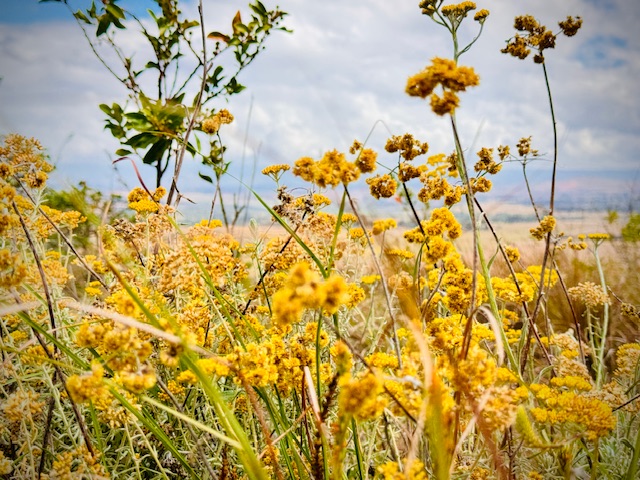
Vehicle entry fees to Naukluft National Park are exorbitant. Although there is a set fee, interpretation varies from place to place! The dirt road is maintained in parts, but recent rains have eroded some sections; better grading is recommended. The rock formations, vegetation, and sheer mountainsides soon quieted our moans as the magnificent landscape took us in. The plateaus and plains, covered in old-gold, velvety Dralon, tempt one to reach out and lazily run a hand across the tippy tops of dried flaxen grass. If only one could. In the heat, we meandered slowly with the windows open, letting the wheaty perfume of cracked, dry grass waft over us.


At the end of the road, we found the entrance gate and the office. While Butch and the official debated (once again) whether the Honey Badger was a registered 6-tonne delivery truck (not) or a motorised caravan (it is), I did some investigating. I ordered us a coffee to be served on the veranda, with views of the jet-black, rocky mountain formations.


---oOo---
“Undoubtedly, for most people, a desert means sand. Few examples of a desert (erg) are more spectacular than the Namib dunes, which stretch along most of Namibia’s Atlantic Coast, extending south into South Africa and north into Angola. The 50,000-square-kilometre Namib Dune Sea within the Namib-Naukluft National Park has now been internationally recognised as a UNESCO World Heritage Site.”

Though the Namib boasts some of the world's highest dunes, over 300m, it’s the ever-changing palette of impressive colours, from gold to pink, cream to brick-red, and apricot to maroon, that truly captivates. The coastal dunes are generally paler, made of newer sand, much of which comes from sediments washed down the Orange River, swept northwards by ocean currents, and then tossed onto the beaches. The colour becomes deeper and redder east of the sand sea because of iron oxide in the quartz sand.


We made it to Solitaire just before the tourist buses arrived for lunch, and we ordered tea, an apple tart, and cream. Unfortunately, the experience disappointed me; the apple tart wasn’t a traditional German apple cake, the pie apples were tinned (understandable, given the location), and the cream came from a can—all fluff with no flavour or substance.
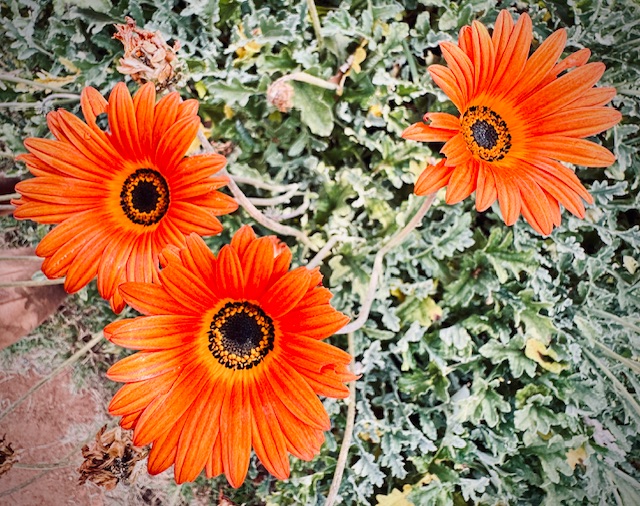
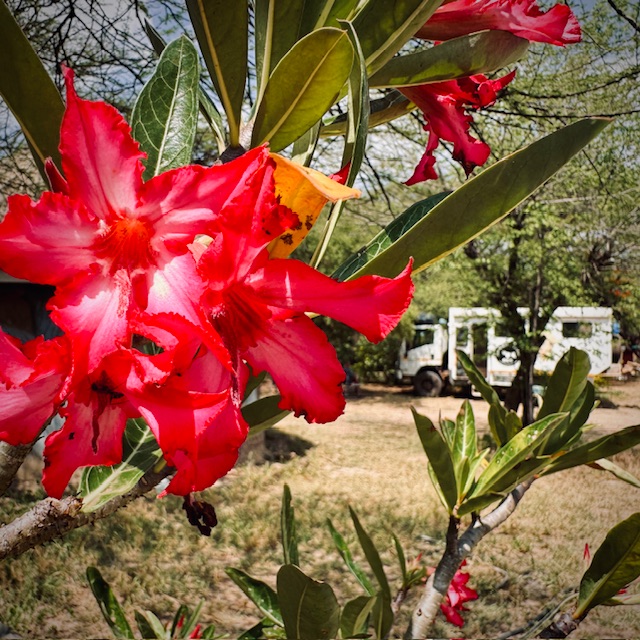
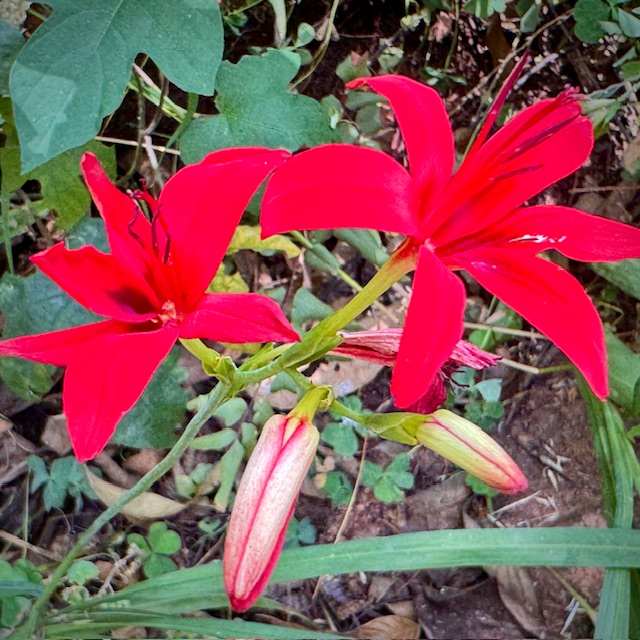
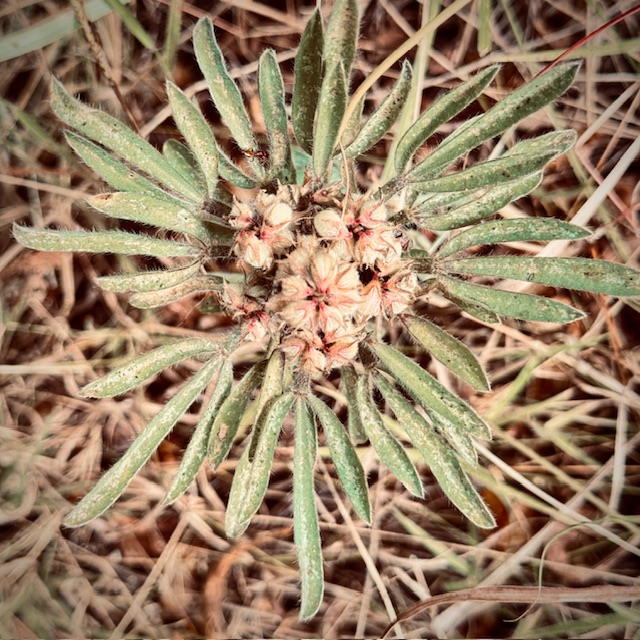
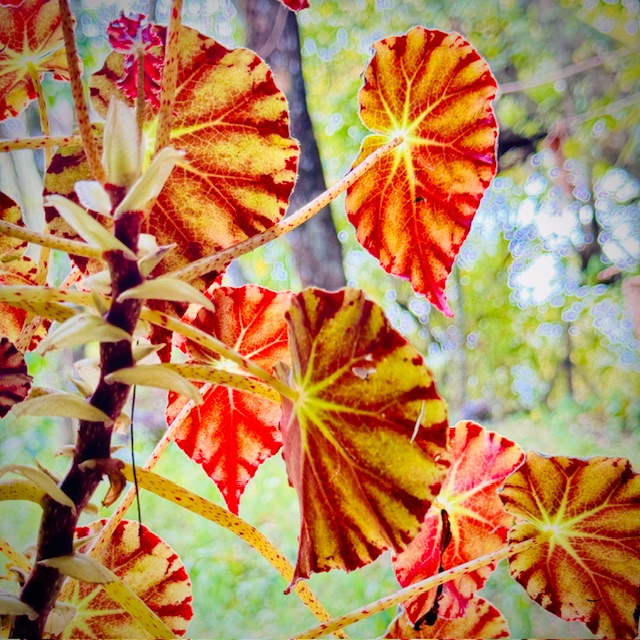
After visiting the facilities, I spent my time among the rusty yet colourful vintage cars and succulents in full bloom. They brought more joy. The tourist bus doors whooshed open, letting tourists flood in. The stream flowed into the restaurant; I walked, stretching my legs. Like the memory of an old flame, Solitaire's reality has changed, matured, and become more commercial. The rusty cars are still very photogenic, the plants and flowers pretty, but the quaintness has been lost.


This time we didn’t make it to Sossusvlei and its magnificent dunes, but we pressed on, and just as well.


We pulled into the gates of Rostock Ritz at coffee time, a game farm with accommodation and a campsite. As we drove up to the lodge, we could smell rain; then the heavens opened, and a drizzle fell, cooling us down.


The tyre pressure monitor was up to its old tricks again. After a quiet spell, the beep, like an alarm, woke us from our complacency. We pulled up on the circular driveway, and Butch hopped out to inspect. Sure enough, we had a flat tyre. A puncture is the last thing you want after almost six hours on the road.


We booked in, and the manager graciously offered to help. He had staff available to help Butch with the heavy wheel. This time, he knew exactly where he'd stashed all his equipment, and with two strong young men, he had the truck jacked up and the spare wheel on the ground. Within half an hour, we were back on the road, ready to set up our campsite for the night. Thank you to the guys who helped us and gave us recommendations in Swakopmund.


---oOo---
The campsite sits a few kilometres from the lodge, tucked behind a small outcrop of koppies. It sits well out of sight of the guest cottages, with views across the golden valley. Although the campsite is private, I thought it might be a tad neglected, out of sight and out of mind. A slow/low season could also account for the tiredness. There was no hot water for showering, and only two of the four basin taps produced a thin trickle. The view over the expansive veld as the sun set coppery over the plains was magnificent, and I forgave it all while I did the dishes and later my ablutions.


---oOo---
For us, it wasn't a good night. It might’ve been stress from the long day, the puncture, or just a “normal” domestic affair. Maybe we both needed some personal space. I knew I needed to walk, so I did, heading into the koppies to watch the sun set over the plains. Watching two ostriches make their way from kilometres away, passing us undisturbed and almost undetected, calmed me. The gemsbok's alertness, as he walked gracefully from one set of dunes to the next, was a treat. These encounters, when we are unsuspecting spectators blending into the landscape, are exceptional.


Our discontent could’ve stemmed from an inability to communicate our feelings or from cumulative exhaustion. Who knows. These things happen, but how we confront our fears and anxieties, and communicate them, can make or break a situation. My spaghetti bolognaise for dinner was served “hot” but arrived “cold.” Which reminds me of Jack, with his fine sense of humour, who says: "Sometimes, not often, I get hot tongue and cold shoulder!"
Some sound advice I read later. “You can measure the happiness of a marriage by the number of scars each partner carries on their tongues, earned from years of biting back angry words.”
― Elizabeth Gilbert, Committed: A Sceptic Makes Peace with Marriage
---oOo---
Onwards and upwards we go. I’ve decided to include this titbit first to show that we are living the dream, but also that there are sweet dreams, daydreams, and sometimes nightmares, too. We're still the same people, with the same emotions, warts, and unique idiosyncrasies. Being in a truck on an adventure doesn’t make life any less rocky or easier to navigate. Being in each other’s company 24/7 in a very small space is a first for us, and at times we have to make tricky, uncomfortable adjustments. We’ll chafe, develop calluses, and pick up scars to improve the journey we’re on. Our patchwork quilt is still new; it needs to go through a wringer to soften and become a comforter.
Secondly, it’s always, to my detriment at times, my philosophy to be clear as glass and, most importantly, always authentic, not ersatz.
---oOo---
The next day we revisited and drove through the Kuiseb canyon, which I’d visited 25 years earlier. The landscape looked completely different then; in winter it was bleak, whereas this time the abundant rains had laid a golden blanket over every square inch of land: the golden grasses, green during the rainy season, were now rich in colour. These landscapes reminded me of my mum's old gold (she loved the colour in the '70s) shantung curtains; they could be shiny yet dull depending on the light, richly textured raw silk, heavy, a fabric but crinkly to the touch. Rubbed between thumb and forefinger, it could set your teeth on edge.


We passed the Tropic of Capricorn; I thought I’d taken a selfie, but I'll have to find it, and kept heading west into the natural sea desert. Fascinating and daunting in equal measure. White sand sometimes reflects the pink in the clouds, a reflection of a sandstorm somewhere off Namibia’s towering coral or orange-hued dunes.

At last, we entered Swakopmund. Butch had his work cut out for him, while I explored the lovely seaside town steeped in German culture. We would certainly stay for a few days.
---oOo---


‘The Road Not Taken’ by Robert Frost is a poem narrated by a lone traveller who encounters two roads, symbolising life's journey and the decisions we make. The narrator chooses the path that was ‘grassy and wanted wear,’ reflecting our desire for individuality and adventure.
“Two roads diverged in a yellow wood,
And sorry I could not travel both
And be one traveler, long I stood
And looked down one as far as I could
To where it bent in the undergrowth;
Then took the other, as just as fair,
And having perhaps the better claim,
Because it was grassy and wanted wear;
Though as for that the passing there
Had worn them really about the same,
And both that morning equally lay.
In leaves no step had trodden black.
Oh, I kept the first for another day!
Yet knowing how way leads on to way,
I doubted if I should ever come back.”
I shall be telling this with a sigh
Somewhere ages and ages hence:
Two roads diverged in a wood, and I—
I took the one less travelled by,
And that has made all the difference.”
---oOo---
P.S. If you’ve never read The Road by Cormac McCarthy, please do. The language is extraordinary, and roads make fascinating metaphors for life, change, journeys, partings, adventure, etc., or simply for uncharted and well-mapped roads suitable for a pilgrimage.
PPS. This will be my last blog post for the year. Thank you for reading my stories. I'm still amazed that 3259 people read my blog this month. That's all the inspiration I need to keep telling our tales. I hope you enjoy a very blessed Christmas season and, amid all the hustle, bustle, and excitement, find time to reboot and recharge your batteries, too.


[photo id="88"


Thank you for wading through my story and all these pictures. The cairn is for you! See you in a while, crocodile.

Comments


Topics
Latest Photos